
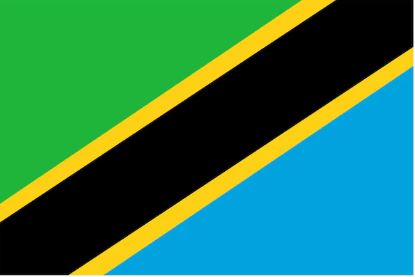
Tanzania/Zanzibar

How One Nation Came to Share Two Governments
Part 1
BattlePlan Virtual Framework Series
Long before I understood sovereignty, constitutional arrangements, or the political history of East Africa, I knew one word: Zanzibar.
I first heard it as a child while watching The Patty Duke Show. One of the show’s theme lyrics casually mentioned “Zanzibar,” placing it alongside Brooklyn Heights and Berkeley Square as if they all naturally belonged in the same conversation. I knew nothing about the island itself, yet the name lingered in my imagination long after the television was turned off.
Years passed. Curiosity remained.
Only much later did I discover that Zanzibar was not simply an exotic place name from a television theme song, but part of one of the more intriguing constitutional arrangements in modern governance.
That discovery raised a question. How can two political identities remain joined without becoming identical? Hmm…
The answer begins with understanding the Union of Tanzania and Zanzibar.
A Union Born from History
The modern United Republic of Tanzania emerged in 1964 through the union of two distinct political entities.
Tanganyika, located on the East African mainland, achieved independence from British rule in 1961. Zanzibar, an archipelago located just off the mainland, experienced its own dramatic transformation following the Zanzibar Revolution in January 1964, which overthrew the Arab Sultanate that had governed the islands.
A few months later, Tanganyika and Zanzibar entered into a political union, forming what would become the United Republic of Tanzania in April 1964. After formally uniting, six months later in October 1964, the Union adopted the name Tanzania by combining “Tan” from Tanganyika and “Zan” from Zanzibar.
Unlike many political unions that gradually absorb one government into another, this arrangement developed differently. The Union created a single sovereign nation while preserving important elements of Zanzibar’s own governmental authority. That distinction continues to shape the country today.
One Nation. Two Governments.
For many, this is where Tanzania becomes especially interesting. Tanzania is internationally recognized as one sovereign nation. Yet governance operates through two governmental structures.
The Union Government manages matters affecting the nation as a whole, including foreign affairs, defense, immigration, citizenship, and other designated Union responsibilities.
Alongside it, the Revolutionary Government of Zanzibar exercises authority over many internal matters affecting Zanzibar itself, including areas such as education, health, local government, and aspects of economic and cultural policy.
The arrangement does not represent divided sovereignty …or… two independent countries existing under one flag. Instead, it represents a constitutional framework in which authority is intentionally distributed according to agreed responsibilities.
Understanding this distinction is essential.
Power is not simply divided. It is structured.
Beyond Centralization
Political systems are often described as either centralized or decentralized, as though governance exists only at opposite ends of a spectrum.
Tanzania suggests another possibility.
Its constitutional arrangement demonstrates that governance can also be negotiated and designed to recognize both shared national interests and distinct regional identities.
Whether one agrees with every aspect of the Union is a separate question.
The more useful observation is that this constitutional structure invites us to reconsider familiar assumptions about political organization, such as, unity does not always require uniformity. In this specific case, shared sovereignty is less about eliminating difference than about determining where common purpose and regional identity can coexist within the same constitutional framework.
Seeing Structure More Clearly
Throughout history, societies have developed different ways of organizing power. Some centralize authority. Some distribute it across regions or institutions.
Others evolve hybrid arrangements shaped by history, geography, and political circumstance.
Tanzania reminds us that governance is not simply about who governs. It is also about how authority is organized, where responsibilities are located, and why those arrangements endure.
Constitutions describe these structures. Experience reveals how they are lived.
That distinction becomes especially important when examining places whose histories resist easy classification.
Reflection
Constitutional arrangements explain how governments function. They do not always explain how those structures are experienced by the people who live within them.
In the next essay, we step beyond constitutional design and into lived experience through conversations with someone whose life has become deeply connected to Zanzibar itself. Her perspective offers another way of understanding not simply how this Union is organized, but how it is experienced.
This essay reflects “BattlePlan Virtual’s” work in digital communications, civic engagement consulting, and cultural publishing. If you are interested in digital content strategy or copywriting support, Contact Keywanda Battle at: keywandabattle@battleplanvirtual.com